
The Tracks We Lay: From the Dust of Mines to the Promise of Tomorrow
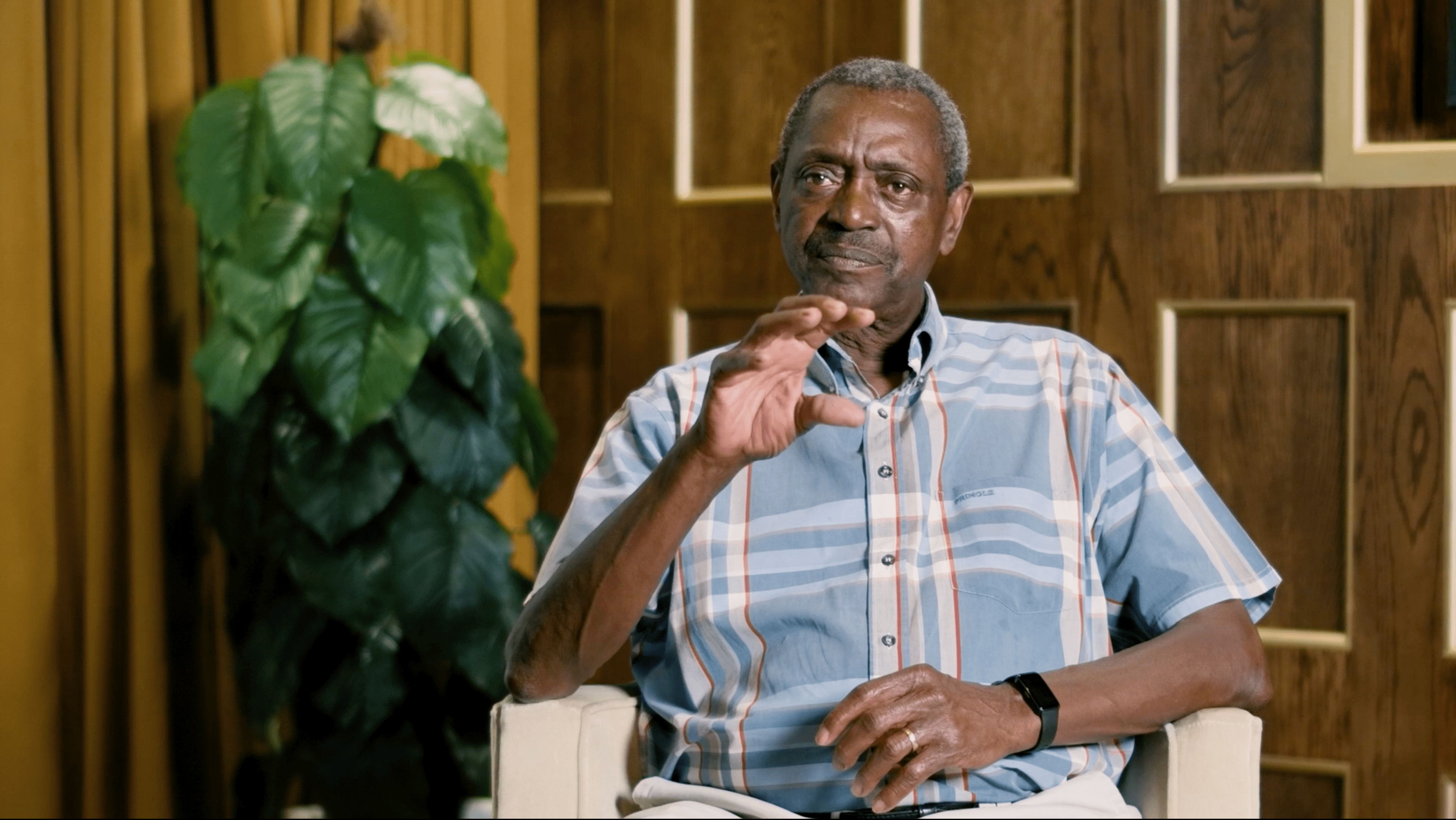
Thirty years ago, a group of South African mineworkers dreamed of something bigger than wages and shifts. They dreamed of a future where their children could walk into lecture halls, offices and hospitals, not just down into shafts. Out of that dream, the Mineworkers Investment Trust (MIT) was born in 1995.
MIT grew out of the National Union of Mineworkers, an organisation forged in struggle. Workers who once stood shoulder to shoulder against police on picket lines now put their hands together to build an investment company. The move was radical. Instead of only fighting for fair wages and better employment conditions, they wanted to create wealth that would outlive them.
It started with just R3 million coming from member subscriptions, a small fortune for a union, but barely a drop in South Africa’s post-apartheid economy. Yet what mattered was not the size of the seed but the soil in which it was planted. It was planted in sacrifice, in solidarity, and in the stubborn belief that even men and women in overalls could lay down tracks for their children’s tomorrow.
To give that dream shape and structure, MIT established the Mineworkers Investment Company (MIC) as its commercial arm. MIC became one of the first 100% Black-owned investment companies in the country, charged with turning mineworkers’ collective sacrifice into sustainable wealth. Every rand of profit earned by MIC is returned to MIT, which reinvests it into education, training, housing and social justice. The Trust is the brain; the Company is the heart. Together, they have created one of the most enduring examples of worker-led empowerment in democratic South Africa.
From that partnership, MIT and MIC became trailblazers. Through MIC, the Trust took early stakes in companies like Primedia, Tracker and Peermont Hotels, making mineworkers shareholders in industries that once excluded them. Over time, the investments grew into an asset base worth more than R6.6 billion. Dividends flowed back into MIT, fuelling scholarships, training centres, and community initiatives that continue to change lives.
Paul Nkuna, one of the early leaders of the Mineworkers Investment Company (MIC), still remembers the intention clearly: “We were mindful that mineworkers would still not be in a position 10 to 20 years down the line to pay for their children’s education.” It was a promise whispered across kitchen tables in mining hostels and family homes: Our children will not go through what we went through.
The early years were not glamorous. But MIC steadily built partnerships with companies like Primedia, Tracker and Peermont Hotels. For many mineworkers, these names were just signs on buildings they passed. Suddenly, they owned a stake.
Today, those early decisions have grown into an asset base of more than R6.6 billion. But what matters more is what those numbers have made possible. Over R1.5 billion has flowed back into communities, into bursaries, training, small businesses, and homes.
It is a story not of sudden riches, but of steady, deliberate growth. A story of miners’ sweat turned into dividends, and those dividends turned into opportunities.
Nothing captures MIT’s legacy better than the faces of graduates at JB Marks Education Trust Fund ceremonies. There, children of mineworkers walk across the stage in gowns and caps, watched by parents who once came home with coal-streaked faces.
Since 1997, more than 4,000 students have received bursaries. Over 2, 030 graduates have qualified as doctors, engineers, accountants, and teachers. Some are the first in their families ever to wear a graduation gown.
At a bursary orientation this year, one young woman said quietly, “I am here because my father went underground so I wouldn’t have to.” That is the heart of MIT, turning years spent in the dark into futures filled with light.
The demand, however, is overwhelming. Every year, more than a thousand apply, but only about 200 can be taken in. “The demand is higher than what we can offer,” admits the MIT Board Chairperson Oupa Komane. It is a painful reminder of how much more is needed. But it is also a spark for the future, a call to grow, to widen the tracks.
Mining towns know the sound of silence when a shaft closes. Retrenched workers, some with decades of experience, suddenly find themselves back in rural villages with nothing but a severance cheque.
MIT responded by creating the Mineworkers Development Agency. Here, ex-miners don’t get charity; they get a chance to learn new skills. Many choose farming, turning family plots into thriving small businesses. Others learn trades like welding or plumbing, becoming the go-to artisans in their villages.
The Elijah Barayi Training Centre has put more than 15,000 people through courses that open doors. For one former rock-drill operator, it meant retraining as a driver and starting a transport business. For another, it meant welding and building a small cooperative. Each story is a reminder that life after mining can still hold dignity.
For decades, mineworkers lived in single-sex hostels and grey barracks where families were not allowed. Through its property arm, Numprop (Pty) Ltd, MIT is working tirelessly to turn the situation around and replace those with real homes where children could finally grow up with space, privacy and stability. In Burgersfort, Limpopo province, one such project is under construction where members have an opportunity to invest and stay with pride. Strategically, Numprop is engaging various mining companies to forge collaborations and partnerships that would enable the delivery and achievement of this objective.
Not every project succeeded. Building homes costs money, and partnerships sometimes face challenges. But the effort itself was revolutionary, to say that a miner deserved not just a wage and better conditions of employment but a home where his family could flourish.
MIT has also invested in ideas. Through the Sam Tambani Research Institute, it has given workers the tools to fight with facts as well as with picket signs. Studies on women in mining and construction exposed the discrimination that still holds many back. “Men in the sector continue to use abusive and discriminatory language,” the research reported, and those findings gave unions and advocates solid ground to demand change.
SATRI represents a quieter part of MIT’s work, creating “labour intellectuals” who can argue policy, influence law, and keep the voice of workers strong in boardrooms and parliament.
Today, MIT touches nearly a million lives. That number includes bursary students, retrenched workers learning new skills, families moving into homes, and young activists reading SATRI reports late at night.
It is not a perfect story. The needs are still greater than the resources. Inequality still looms. Mining towns still struggle when shafts close. Yet, three decades in, the Trust’s tracks stretch far and wide.
From a union hall in 1995 to classrooms, farms, offices, and homes across South Africa, MIT’s journey shows what solidarity can build. It shows that wealth is not just about shares or dividends but about partnerships, long-term vision, and investments in changing the life of a miner’s child.
As MIT celebrates its 30th year, it does so not as a monument to the past but as a living force. The tracks laid in dust have become pathways of promise. And with every new graduate, every new enterprise, every new voice raised for justice, those tracks continue forward, carrying us all towards the tomorrow that mineworkers once dreamed of.
When Mandla first joined the industry, many of his colleagues could not read or write. Payslips, medical reports and contracts were confusing and intimidating. Adult Basic Education and Training (ABET) changed that. Through ABET classes, mineworkers learned to sign their own names, understand the documents that governed their lives and participate more confidently in union meetings and community decisions.
“Education is a mineworker’s widest dream,” Mandla says. “ABET gave workers dignity.” But ABET was only the beginning. As the NUM leadership worked with MIT to establish the JB Marks Education Trust Fund, a new layer of opportunity opened for mineworkers’ children – access to colleges, universities and professional careers that had once felt out of reach.
Today, Mandla proudly tells the story of families where the parent started out illiterate, and the child became the first graduate – in some cases, going all the way to a PhD. What once seemed impossible for a mining family has slowly become part of a new normal: children of rock drill operators, cleaners and general workers becoming doctors, engineers, teachers, accountants and researchers.
For Mandla, graduation ceremonies are the most emotional part of the journey. He has watched parents travel long distances in their best clothes to sit in university halls they never imagined entering. He has seen the look on a mother’s face when her child’s name is called, and the realisation that years of sacrifice underground have helped unlock a different life above ground.
“One graduate changes the story for a whole family,” he explains. “You can see younger siblings saying, ‘If my sister can do it, so can I.’ Education doesn’t just lift one person – it lifts a household and, over time, a whole community.”
Mandla also understands that this progress is fragile. The Trust relies on contributions and careful management of resources. Economic pressures and rising costs of study threaten to shut the door on many talented young people. That is why he argues that strengthening institutions like MIT and JB Marks is not a luxury – it is an investment in South Africa’s long-term stability and growth.
In mining towns and labour-sending areas, the ripple effect is already visible. Former beneficiaries return as professionals, mentors and role models. Some sit on boards, others teach at universities or run businesses that employ more people. Each success story is a quiet answer to the question of whether mineworkers’ sacrifices have been worth it.
From ABET classrooms on mine property to convocation stages at universities, Mandla has watched education change people’s confidence, language and possibilities. Where once a thumbprint stood in for a signature, now degrees hang on walls. Where once mineworkers felt shut out of decisions, their children now sit at tables where policies, budgets and strategies are shaped.
“With JB Marks, there is light, there is a future,” Mandla says. His story – and the stories of thousands of families like his – is a reminder that when workers organise to invest in education, they are not only changing their own lives. They are rewriting what is possible for the generations that follow.