
Carrying Forward Her Father’s Dream: Zimasa’s Journey from the Mines to Medicine
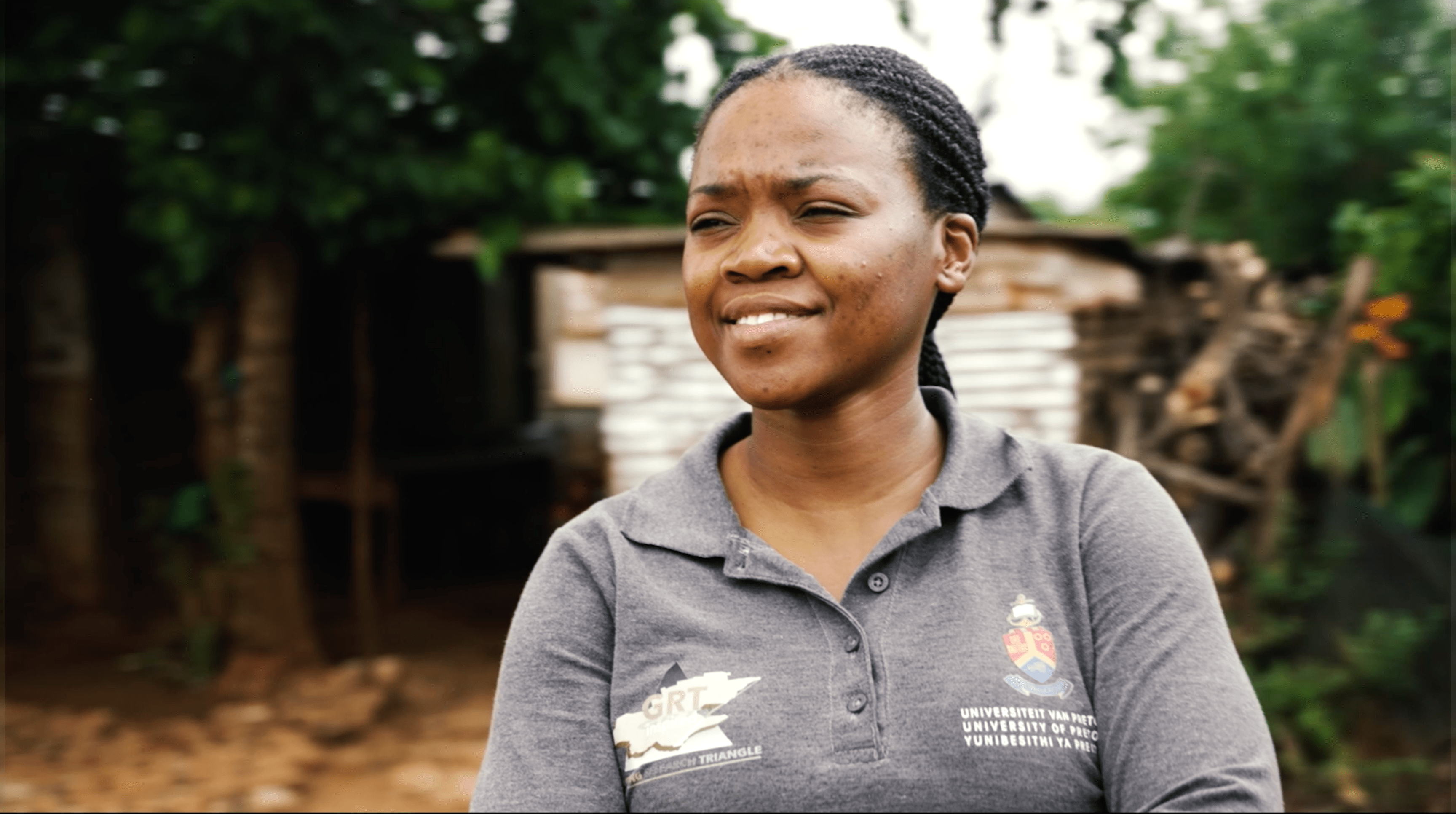
When Zimasa Phote thinks of her father, she remembers a man of quiet dignity who gave everything to his family. A mineworker at Gold Fields from 1994 until retirement in 2015, he had only reached Standard One at school, yet he returned to learning underground, completing his ABET courses up to Grade 11. Education was his compass. He made it clear to his children that they would not inherit the hardships of mining, but the hope that comes with books, classrooms, and qualifications.
His sacrifices were immense. He moved the family from the Eastern Cape to the Free State so that his children could study in better schools. He told stories of queuing overnight in Mthatha, waiting to be chosen for a mine job, and how even fifty rand a month once meant survival. In the mines, he worked Sundays too, though he was a man of faith, simply to ensure his children had enough to eat and could keep studying. His dream was to see his children live comfortably, free of the weight he carried on his shoulders underground.
Zimasa carried that dream into her own life. Her first year at university was marked by hardship. She applied to countless bursaries and was rejected by them all. A study loan carried her briefly, but after her father’s passing in 2017, she could no longer secure funding without a surety. Her living situation compounded the struggle. She stayed in downtown Johannesburg in a building where a tavern roared beneath her room. Studying at home was impossible, so she often slept at school and returned only in the mornings to shower. Money was scarce, transport was unreliable, and she wondered if her dream might collapse before it had even begun.
Her father had applied for the JB Marks Education Trust Fund on her behalf before his passing. When she finally received word that the bursary had been approved, she feared it would be withdrawn since he was no longer alive. But NUM confirmed that his years of membership secured her eligibility. To her astonishment, JB Marks continued to fund her studies.
The bursary transformed her life. It covered her tuition, accommodation, food, and textbooks. For the first time, she moved into proper student housing where noise was controlled, safety was assured, and studying was possible. She travelled safely on the university shuttle buses, received tutoring support, and could finally focus on her education instead of surviving. “It gave me hope,” she says. “It made me believe that my dreams were possible.”
Zimasa qualified as a clinical associate, choosing a path that allowed her to make a difference in rural communities. During the COVID-19 pandemic, her exposure to research awakened a new passion, studying the systemic barriers to healthcare. Today she is a clinical lecturer and field coordinator at the University of Pretoria, mentoring students and shaping the next generation of healthcare professionals. She sees herself as the role model she once longed for when she was starting out.
Her work is not just a career, it is her father’s dream realised. Every class she teaches, every student she inspires, is a continuation of the legacy he left behind.
Her message to the children of mineworkers is clear. “Your dreams are valid. Your dreams are possible. Education makes the difference.” She admits that South Africa’s economy is difficult, and unemployment is high, but insists that qualifications expand opportunities rather than close them. For her, the old saying remains as true as ever, education is the key to life.
Zimasa also wants mineworkers’ children to see their parents’ labour not as a burden but as a gift. “Your parent puts their life at risk every day for your sake,” she says. “Take that as the greatest privilege.”
From a noisy flat in downtown Johannesburg to the lecture halls of the University of Pretoria, Zimasa’s journey is a story of resilience, sacrifice, and renewal. It is about a father who gave everything for education, a bursary that stepped in when hope seemed lost, and a young woman who turned both into a career of purpose.
Her story captures the essence of MIT and MIC’s legacy, the belief that mineworkers’ sacrifices can be transformed into opportunities that uplift not just individuals but families, communities, and generations.
When Mandla first joined the industry, many of his colleagues could not read or write. Payslips, medical reports and contracts were confusing and intimidating. Adult Basic Education and Training (ABET) changed that. Through ABET classes, mineworkers learned to sign their own names, understand the documents that governed their lives and participate more confidently in union meetings and community decisions.
“Education is a mineworker’s widest dream,” Mandla says. “ABET gave workers dignity.” But ABET was only the beginning. As the NUM leadership worked with MIT to establish the JB Marks Education Trust Fund, a new layer of opportunity opened for mineworkers’ children – access to colleges, universities and professional careers that had once felt out of reach.
Today, Mandla proudly tells the story of families where the parent started out illiterate, and the child became the first graduate – in some cases, going all the way to a PhD. What once seemed impossible for a mining family has slowly become part of a new normal: children of rock drill operators, cleaners and general workers becoming doctors, engineers, teachers, accountants and researchers.
For Mandla, graduation ceremonies are the most emotional part of the journey. He has watched parents travel long distances in their best clothes to sit in university halls they never imagined entering. He has seen the look on a mother’s face when her child’s name is called, and the realisation that years of sacrifice underground have helped unlock a different life above ground.
“One graduate changes the story for a whole family,” he explains. “You can see younger siblings saying, ‘If my sister can do it, so can I.’ Education doesn’t just lift one person – it lifts a household and, over time, a whole community.”
Mandla also understands that this progress is fragile. The Trust relies on contributions and careful management of resources. Economic pressures and rising costs of study threaten to shut the door on many talented young people. That is why he argues that strengthening institutions like MIT and JB Marks is not a luxury – it is an investment in South Africa’s long-term stability and growth.
In mining towns and labour-sending areas, the ripple effect is already visible. Former beneficiaries return as professionals, mentors and role models. Some sit on boards, others teach at universities or run businesses that employ more people. Each success story is a quiet answer to the question of whether mineworkers’ sacrifices have been worth it.
From ABET classrooms on mine property to convocation stages at universities, Mandla has watched education change people’s confidence, language and possibilities. Where once a thumbprint stood in for a signature, now degrees hang on walls. Where once mineworkers felt shut out of decisions, their children now sit at tables where policies, budgets and strategies are shaped.
“With JB Marks, there is light, there is a future,” Mandla says. His story – and the stories of thousands of families like his – is a reminder that when workers organise to invest in education, they are not only changing their own lives. They are rewriting what is possible for the generations that follow.