
Opinion: Empowerment Is a Mission, Not a Tick-Box Exercise
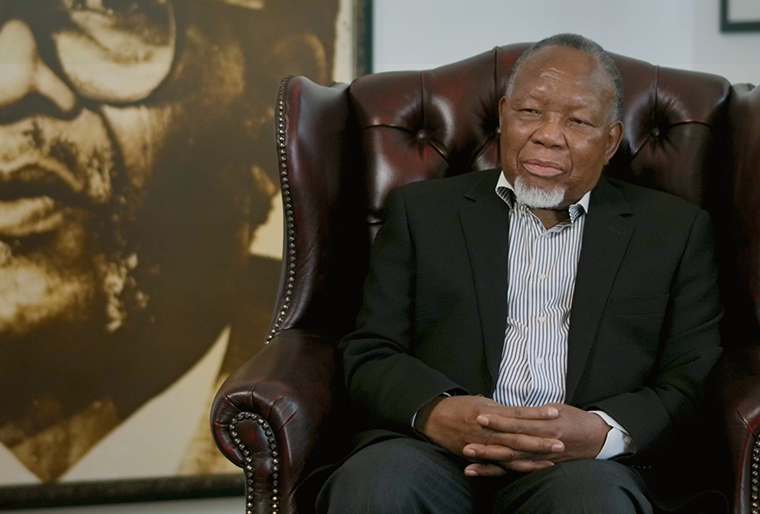
When we in the NUM helped establish the Mineworkers Investment Trust (MIT) back in 1995, it was not to create overnight millionaires. It was to empower our people for generations. We started with a mere R3 million in seed capital, deliberately avoiding any investments that would conflict with our duty to workers (for example, no stakes in companies where NUM members were employed). Instead, we invested in sectors like finance, media, and technology on a strictly commercial basis, proving that black empowerment could be both principled and profitable. The results speak volumes, from that humble start, the Mineworkers Investment Company (MIC) wholly owned by our union trust has grown its net asset value to about R7.8 billion today. More importantly, it has channelled over R1.5 billion of dividends into educational bursaries, housing, and social upliftment programmes for mineworkers and their families. This is broad-based empowerment in action. Ordinary workers’ children graduating from university, retrenched miners starting small businesses with support, and a community accumulating wealth collectively rather than a select few reaping all the gains.
Yet, as I look at the broader landscape of Black Economic Empowerment (BEE) in South Africa today, I am deeply disheartened. The vision we had of empowerment as a mission-driven, inclusive project has been largely lost in implementation. Statistics from the government’s own B-BBEE Commission reveal a troubling stagnation. Black ownership of businesses remains stuck below 30% on average, and even declined slightly in recent years. In fact, the Commission’s latest trend report showed black ownership dropping to 29.5% from 31% the year prior. Black women’s ownership is even lower and growing more slowly. Consider our stock market, not a single company listed on the JSE is 100% black-owned, 0% unchanged in recent years (down from a meagre 3% in 2019). Entire sectors remain untransformed, agriculture and finance, for instance, average only about 17% black ownership, a glaring indicator that meaningful participation in the commanding heights of the economy is still out of reach for most black South Africans.
These numbers aren’t just statistics; they reflect broken promises. Two decades of B-BBEE were supposed to democratize the economy, yet inequality in our country has barely budged. South Africa tragically retains the title of most unequal society in the world, with a Gini coefficient around 0.65. Unemployment remains sky-high, especially among the youth at 64%, meaning an entire generation sees little hope of inclusion in the economy. As a veteran trade unionist, I ask, what went wrong with BEE, and what lessons must we learn?
From where I stand, a fundamental flaw has been the shift from a developmental, mission-driven mindset to a narrow, deal-driven approach. Too often B-BBEE has been reduced to a tick-box exercise for compliance. Large firms treat empowerment like a paperwork hurdle, a matter of scoring points on ownership profiles or procurement quotas rather than a genuine investment in people. I have sat in meetings where companies tout their “empowerment credentials” by pointing to a single black shareholder appointed to please regulators, or a one-time transaction that transferred some shares (often discounted and debt-laden) to a politically connected consortium. This isn’t broad-based empowerment; it’s window-dressing. Even the BEE Commission has flagged that many corporates pursue BEE in letter but not spirit, complying “as a ‘tick-box exercise’” without real transformation of their practices.
Worse, some engage in active subversion of the goals – the notorious practice of fronting. We’ve seen “empowerment” deals where black employees or community trusts are listed as owners on paper, but have no real power or dividends to show for it. The Commission has highlighted the “emergence of sophisticated fronting” schemes that misuse discretionary trusts or similar vehicles to falsely claim black ownership. Such malpractices not only rob intended beneficiaries; they also poison public perception of BEE.
So, what can be done? First, we must reclaim the original intent of broad-based empowerment – truly broad participation and ownership. This means structuring empowerment deals and vehicles to benefit workers, communities, and the grassroots, not just handpicked beneficiaries. The experience of the NUM and its investment arms offer powerful lessons here. For example, employee share ownership plans and community trusts can ensure that hundreds or thousands of people gain wealth and skills from a deal, rather than a few well-connected individuals. In our case, the Mineworkers Investment Trust was deliberately set up to serve mineworkers and their dependents collectively. Over the years, thanks to MIC’s success, thousands of bursaries were awarded through the NUM’s JB Marks Education Trust Fund, and training centres like the Elijah Barayi Training Centre were funded to upskill workers. These are tangible, long-term investments in human capital that ripple out to families and communities – exactly the kind of impact BEE needs to have to be meaningful.
Future BEE schemes should emulate this and lock in benefits for the broad base. If a mining company does an empowerment deal, let it be with a broad trust representing all its employees or community members, with dividends funding housing, education, or health for those people. This would ensure empowerment is felt on the ground.
Secondly, we need disciplined, mission-driven institutions to steward empowerment funds – institutions insulated from political meddling and short-term temptations. In our model, MIC was run as a professional investment company with a strong governance framework. We maintained a strict separation between the union’s politics and the investment decisions. The trust (MIT) set the broad social mandate and held the shares, but we appointed skilled investment managers and independent directors to run MIC commercially. As a result, MIC wasn’t pressured to do political favours; it focused on sustainable growth and prudent investment – even avoiding volatile mining shares that could compromise union integrity. This “Chinese wall” approach ensured accountability and focus.
Third, empowerment must be about building capacity and enterprise, not just sharing existing wealth. One shortfall of BEE as executed is the focus on passive equity ownership (often funded by debt) rather than active development of black entrepreneurship and skills. We need to reignite the idea that empowerment is about enabling people to create wealth, not just partake in wealth created by others. This means far greater emphasis on the Enterprise and Supplier Development (ESD) elements of B-BBEE – incubating black-owned businesses, mentoring them, integrating them into value chains in a substantive way.
Finally, and critically, the rules should reward truly broad-based initiatives. For instance, a company that gives 10% ownership to an employee trust benefiting thousands of workers should get more BEE credit than one that gives 30% to a single billionaire. The quality of empowerment matters, not just the quantity. Our policies must recalibrate to emphasize this.
South Africa stands at a crossroads on economic empowerment. The status quo is clearly not delivering – not for the millions of unemployed youths, not for the small township entrepreneur shut out of the supply chains, and not for the broader economy which remains concentrated and unequal. We can either continue down this road of cynicism, where BEE is seen as a failed experiment that only greases the palms of a few, or we can radically redirect our empowerment model using the lessons learned from past mistakes and successes. The NUM, through entities like MIT and MIC, showed one path forward – one built on visionary, inclusive leadership, developmental discipline, and long-term thinking. We treated empowerment as a means to uplift a community, not a quick ticket to riches. Decades later, that foresight has created lasting value, not only in financial terms, but in human terms through educated graduates, funded community projects, and a legacy of hope.